
Theme and Variations
Part II

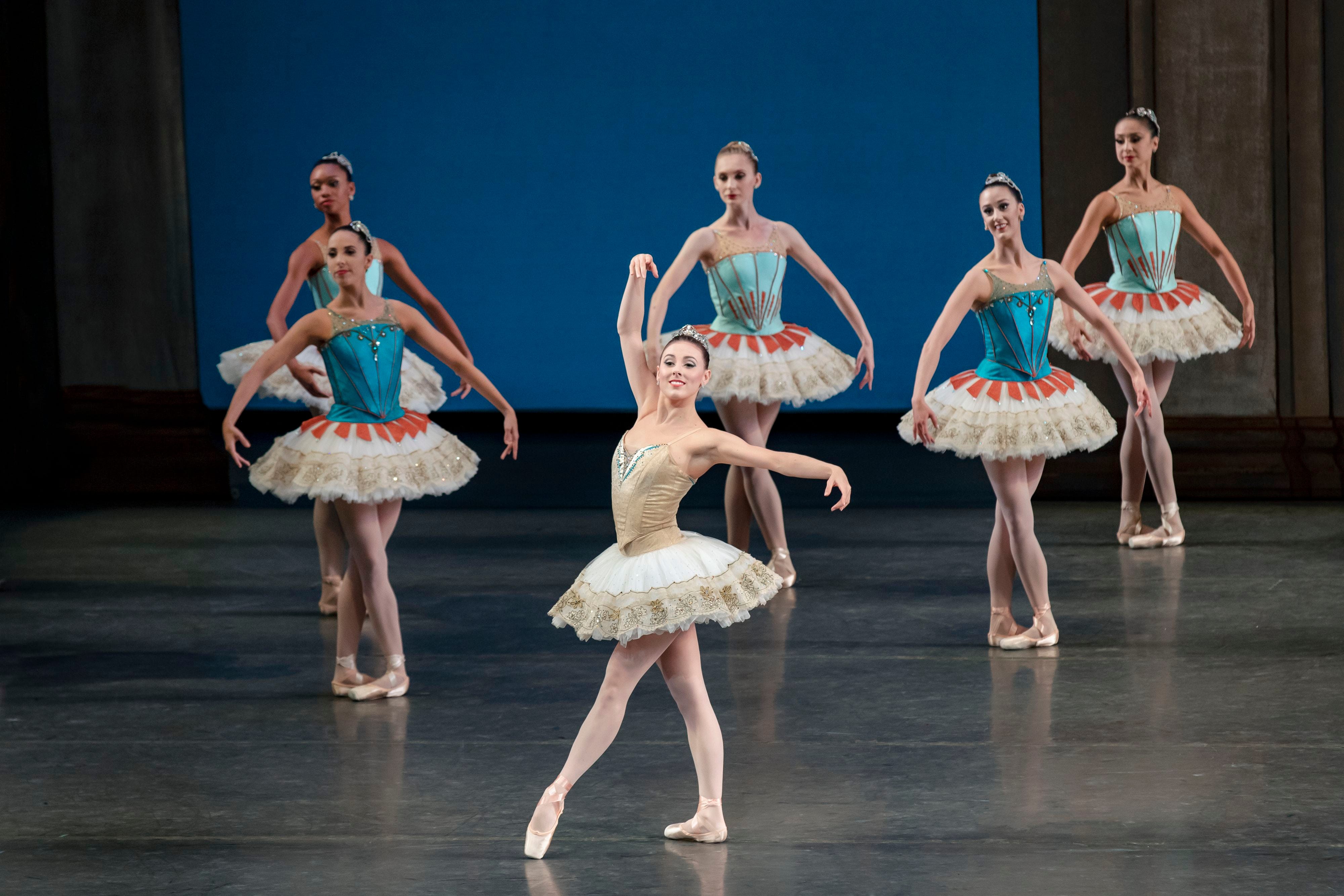
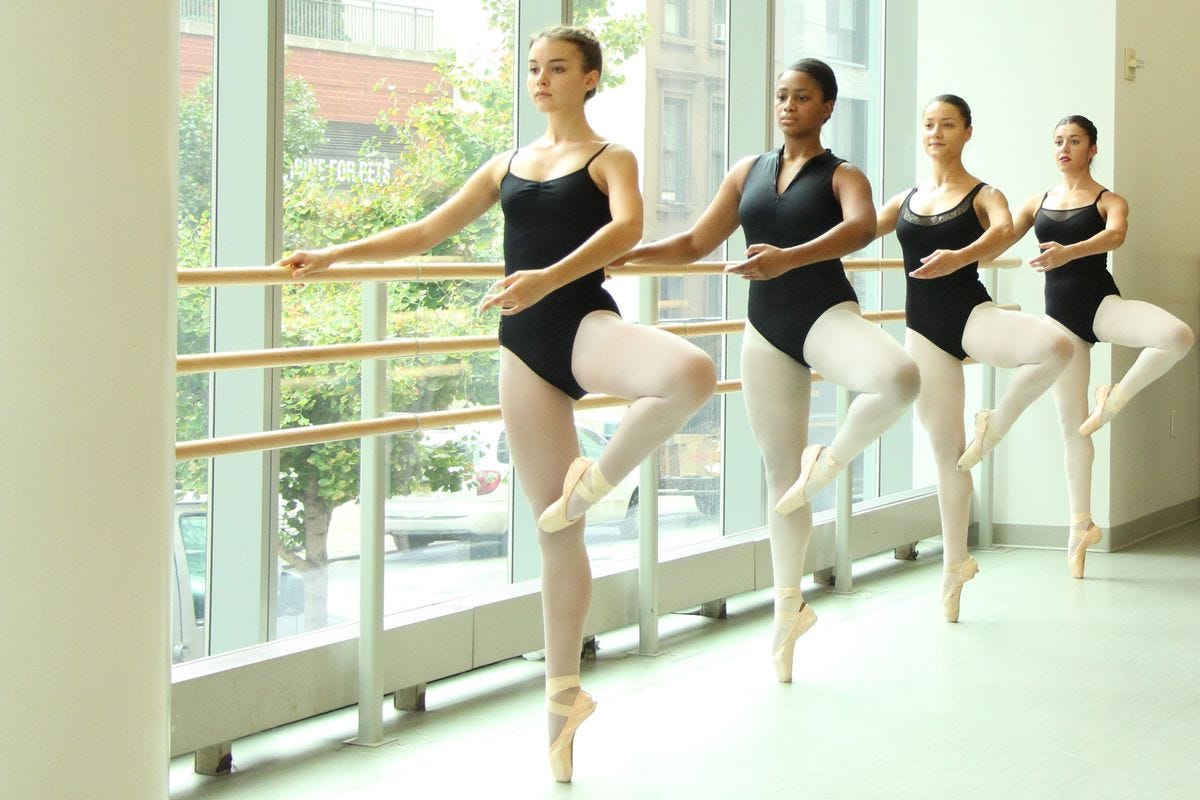
“Theme and Variations” starts with the principals, standing with the corps and demi-soloists, in fifth position. Heels tight to toes, lines straight and even. The first step of the ballet is a battement tendu performed by the ballerina. In Balanchine’s life-long process of reinventing technique, many dancers noted the number of tendus he would give at barre.
“Tendus were done daily and in large numbers, because for Mr. B and his company, the saying was, the more tendus, the better […] The action of the foot correctly moving out from and returning to fifth is one of the most elementary skills and a basic foundation of Balanchine’s more articulate footwork.”
-Suki Schorer, legendary teacher at S.A.B., in her book Suki Schorer on Balanchine Technique.
Tendus set up a dancers leg moving forward through the rest of dance class. These ones set up the ballerina moving forward through the rest the ballet- a back to basics moment before the technical decathlon before her, where she must be crisp and bright and lyrical and exact and musical and flowy and sharp and look quite calm and happy throughout it.
Tendus are an important recurring motif in this ballet, by the way. The simple clarity of the line reflects the simple clarity of the ballet- powerful, energetic, and fabulous, but not extra.
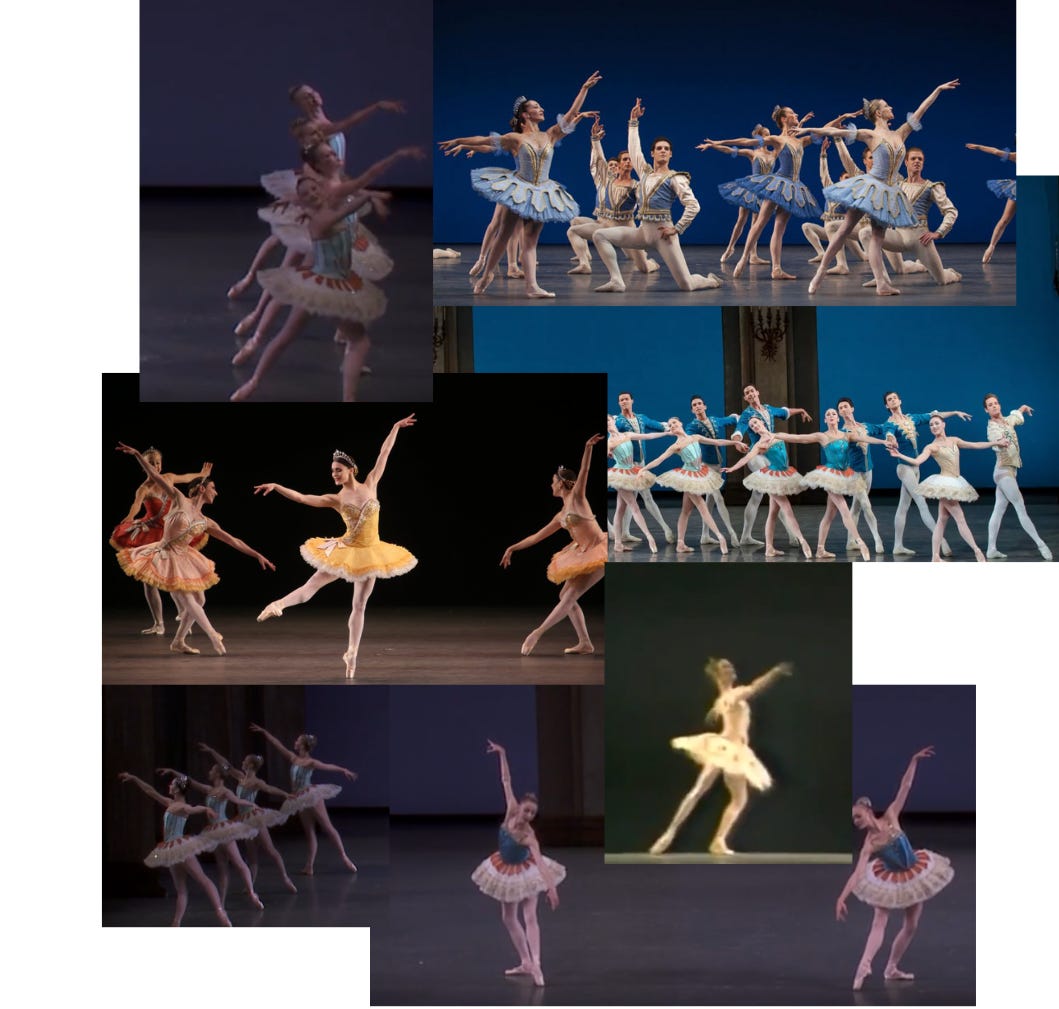
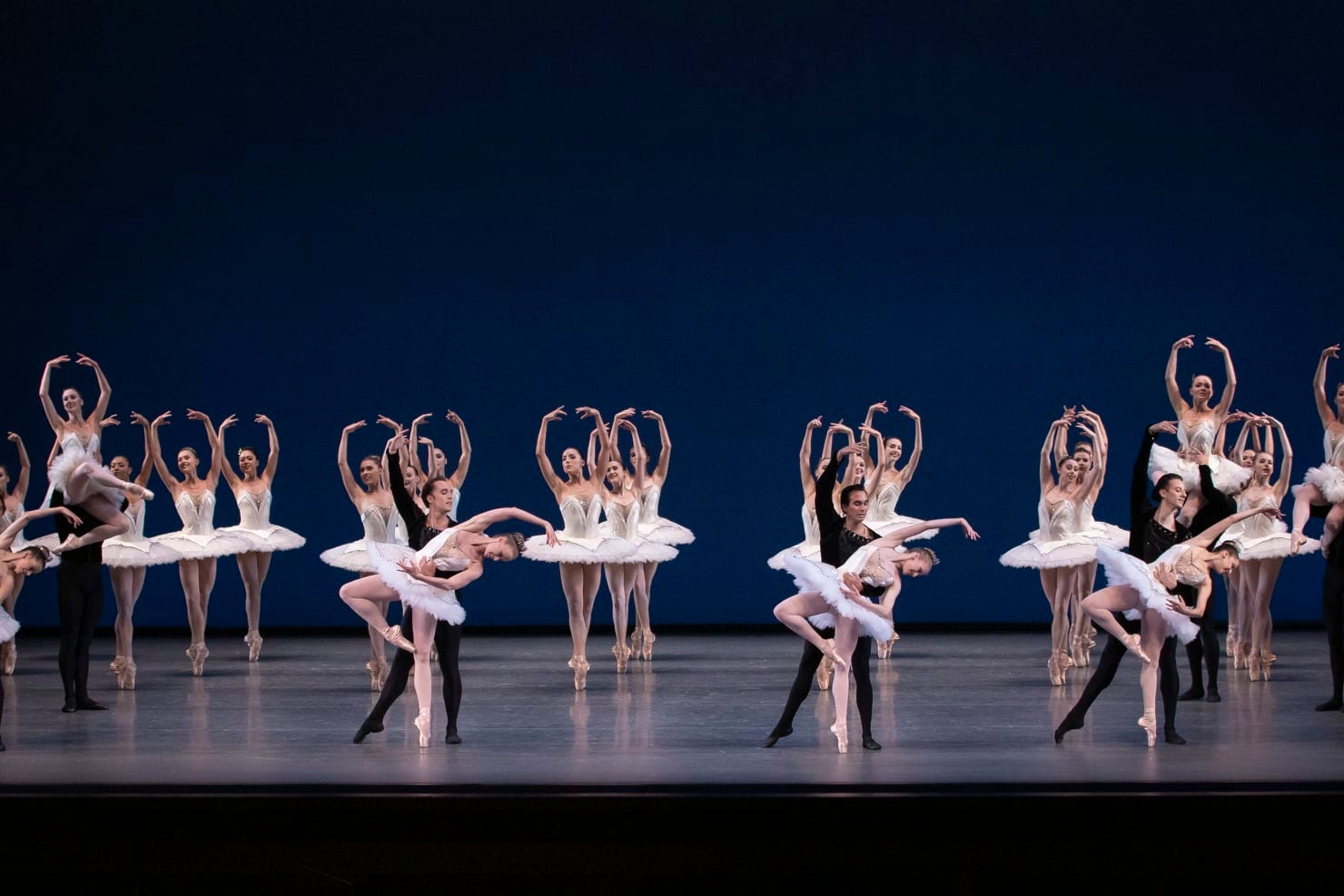
At one point (around 5:25 into the piece, depending on the tempo), the female corps and demi-soloists have the stage to themselves.
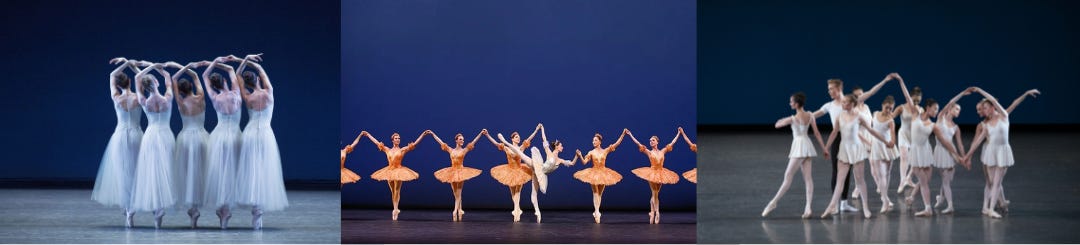
And they take full advantage of it, taking up all of the space in high arabesques and jumps. While always original (that’s why his work is so genius!), this is textbook Balanchine corps work: allowing the masses to do principal-caliber choreography, shifting panels and reinventing endless new ways to break up and rearrange bodies on a stage. Another similarity Theme has to other ballets Balanchine choreographed in the era like “Serenade” and “Concerto Barocco” are his daisy chains- “Theme has a famous one, where the ballerina performs adagio on pointe supported by bourreeing corps girls, proving that, as a ballerina in Balanchine’s work, she doesn’t need a man to be supported, strong, and beautiful - he is just the gold setting for her diamond.
I particularly like the above video, featuring Kirkland and Mikhail Baryshnikov, because the vantage point and the bright red and orange tutus allow for a full enjoyment of the choreography. As someone who is more often in the third or fourth ring than anywhere else at N.Y.C.B., I can attest that there are big benefits of being further away from stage.
Another kaleidoscopic moment of the ballet comes at the end, just before the principal couple enters. All of the corps de ballet and demi-soloists form three rows until suddenly they shift slightly, and it’s a pinwheel, until, wait, no, the corps line the sides and the demi-soloists form a line all the way upstage.
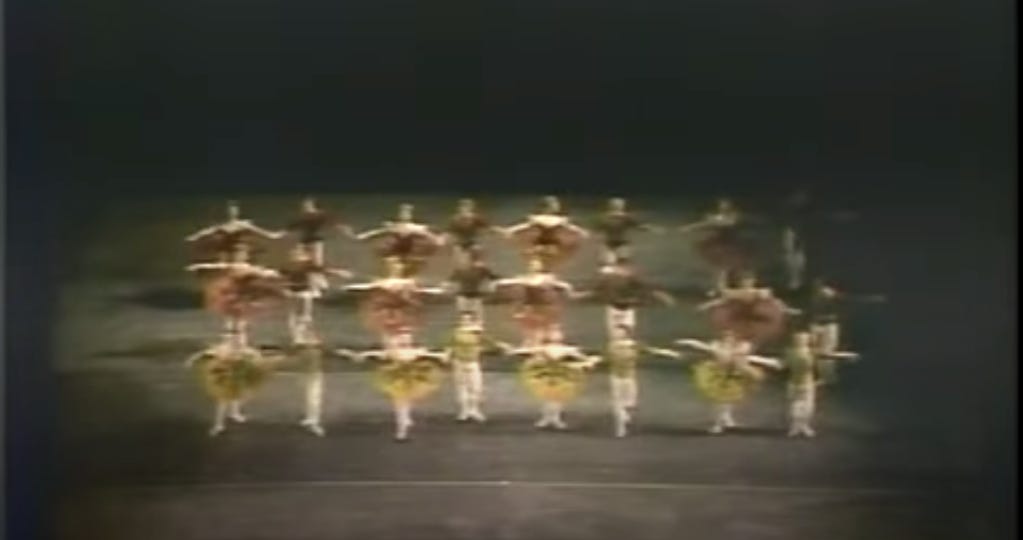
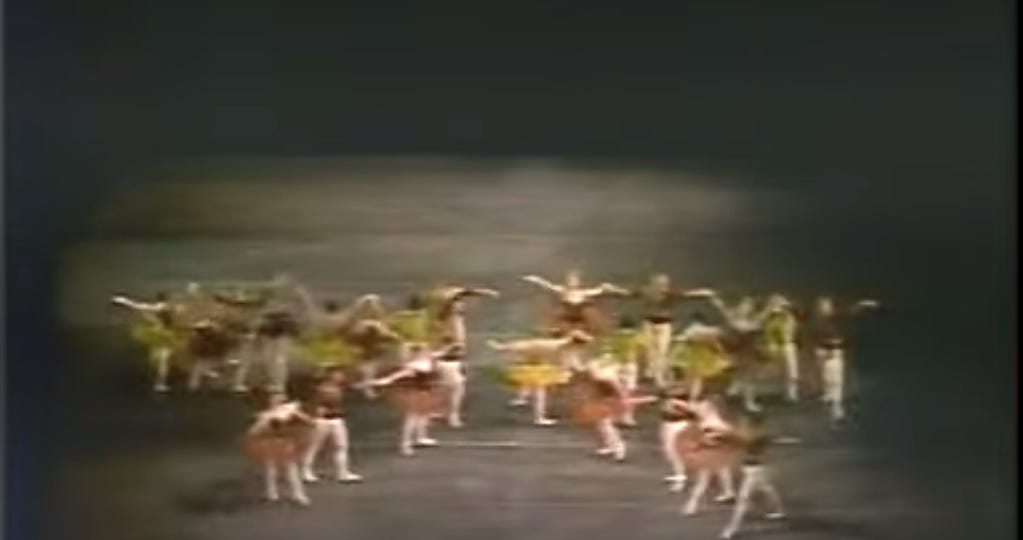
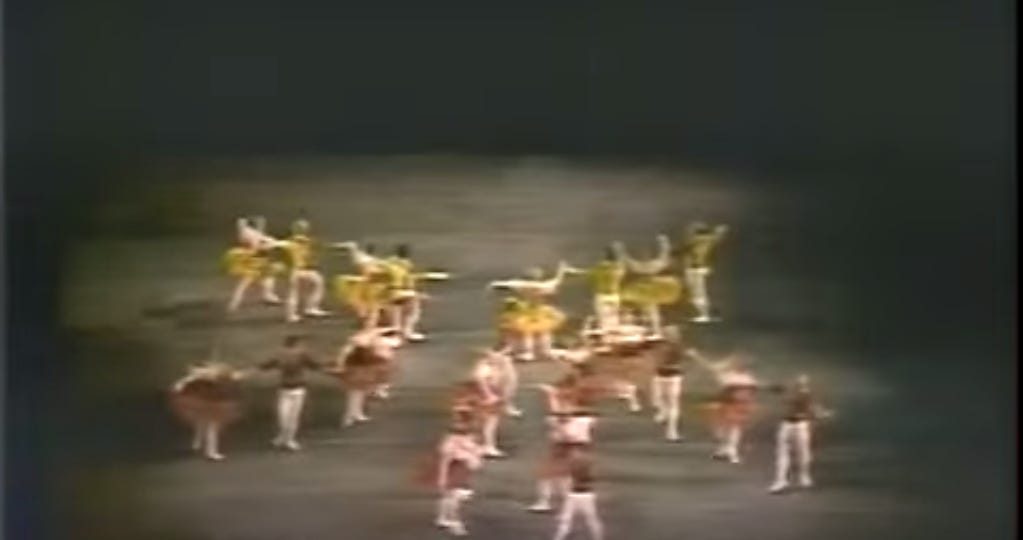
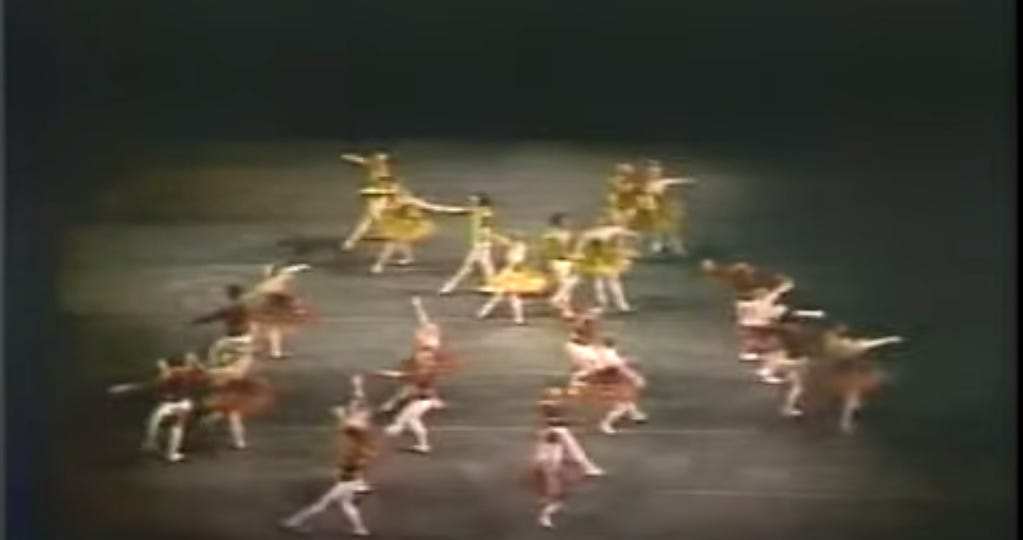
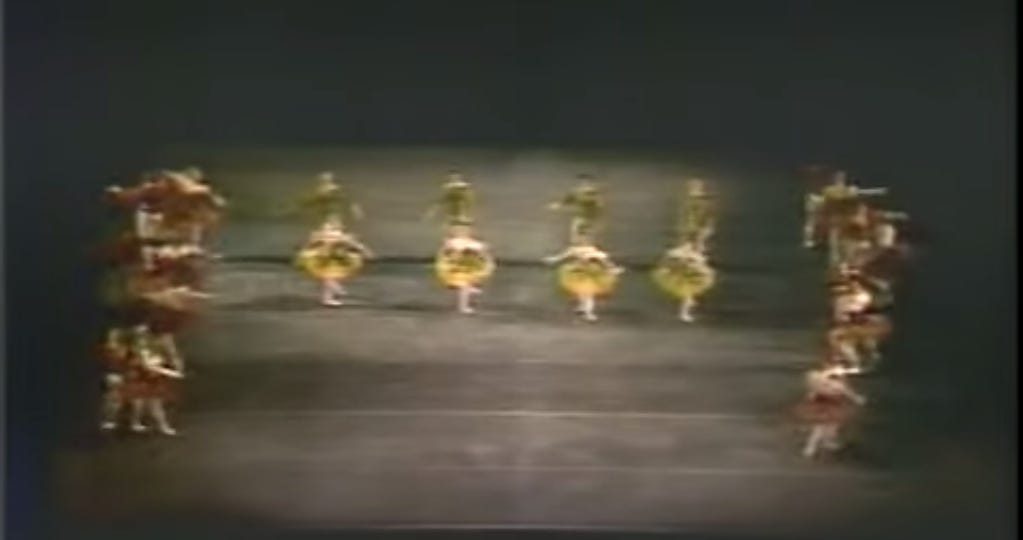
This also a moment where we see Balanchine’s famous arithmetic: three rows of eight, or four lines of three couples, shifting to become two columns of four couples and then two lines of four demi-soloist. Throughout the ballet, almost every possible configuration of these dancers is utilized, smoothly and roundly, in a way that’s satisfying to watch but difficult to realize unless you pay close attention. One of my favorite moments is when the whole cast forms a diagonal line, to polonaise in pairs. It reminds me of an iconic moment in Balanchine’s Diamonds, another ballet to Tchaikovsky .
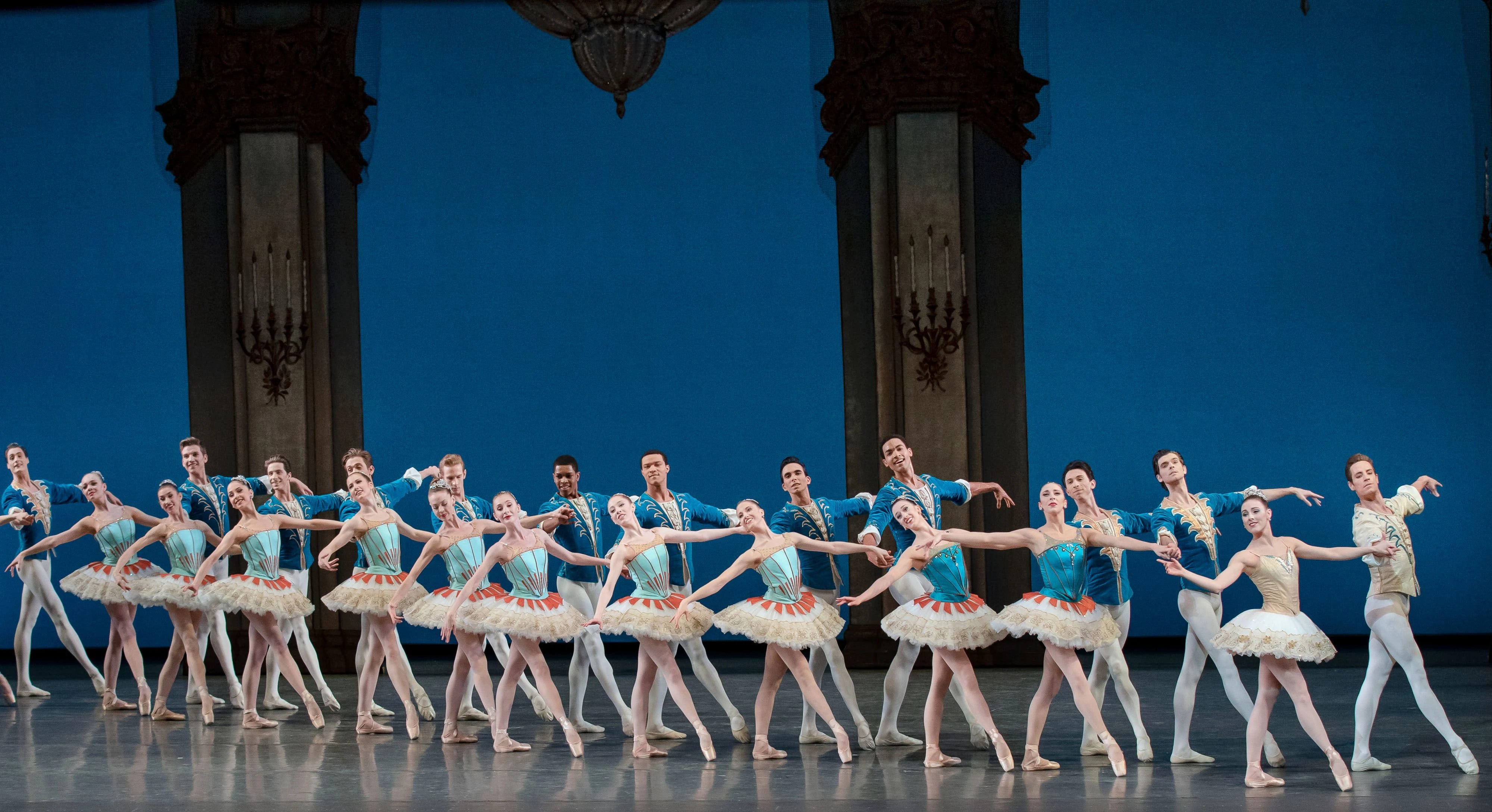
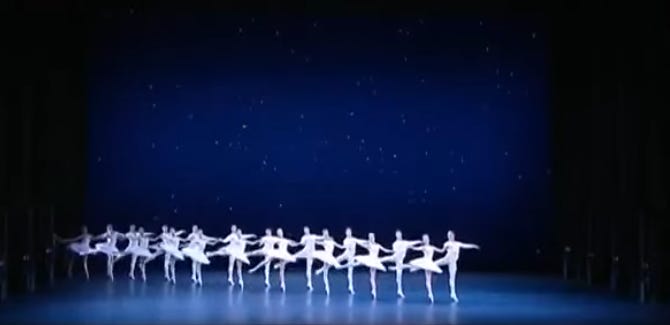
At the start of the finale, when the principal couple rejoins the ranks, we see a prime example of Balanchine’s choreographic experimentation: taking a classic position- here, passe releve- and tilting it off its axis.
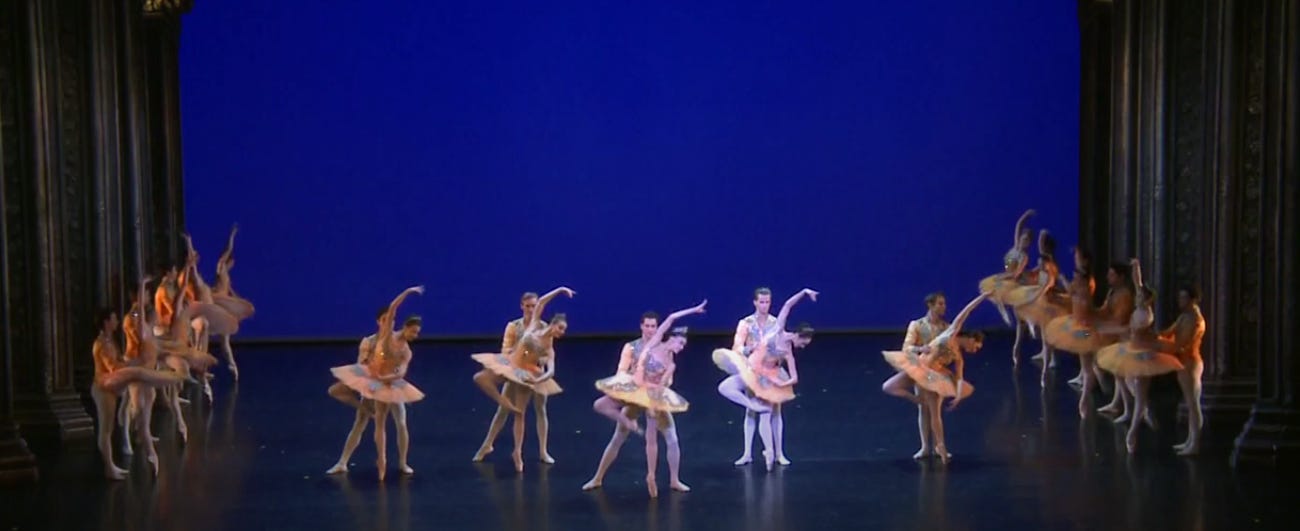
One famous story of Theme and Variation’s creation is that of Igor Youskevitch’s solo: he approached Balanchine asking for a more challenging solo. In 5 minutes, the choreographer had created one of the most intimidating male solos in ballet:
The beginning section of the solo is remarkably similar to the third entrance of Dewdrop in Balanchine’s Nutcracker, with a saute with a double rond de jambe into a pique.
Both pieces of choreography are satisfying to watch (and probably to dance: I’ve only ever tried Dewdrop), in part, because of the simplicity of the steps: just two movements, repeated over and over. But the way they are paired (both, in fact, to Tschaikovsky) brings out the elegance of the music and its relationship to the dancer. Throughout Theme, the music seems to carry the dancer, and the dancer reveals the music in a new light.
Note: New York City Ballet is still working to get a new contract!
Send a Letter to New York City Ballet Leadership:
“Following nearly eight hours of bargaining on October 20, there continues to be a significant gap between the wage proposals presented by AGMA and Management. AGMA Artists are now not working again until November 11 (as we only have 37 guaranteed paid weeks) and still need your support in our fight for a fair contract! If you have already sent a letter to NYCB Leadership: Thank you! Feel free to send more.” -AGMA
Wonderful piece and analysis! Were you able to catch ABT's Fall Season? The last program included several casts of Theme & Variations. :)
very cool!