
Serenade, Again
Weekly Dispatch From: The Orange Groves
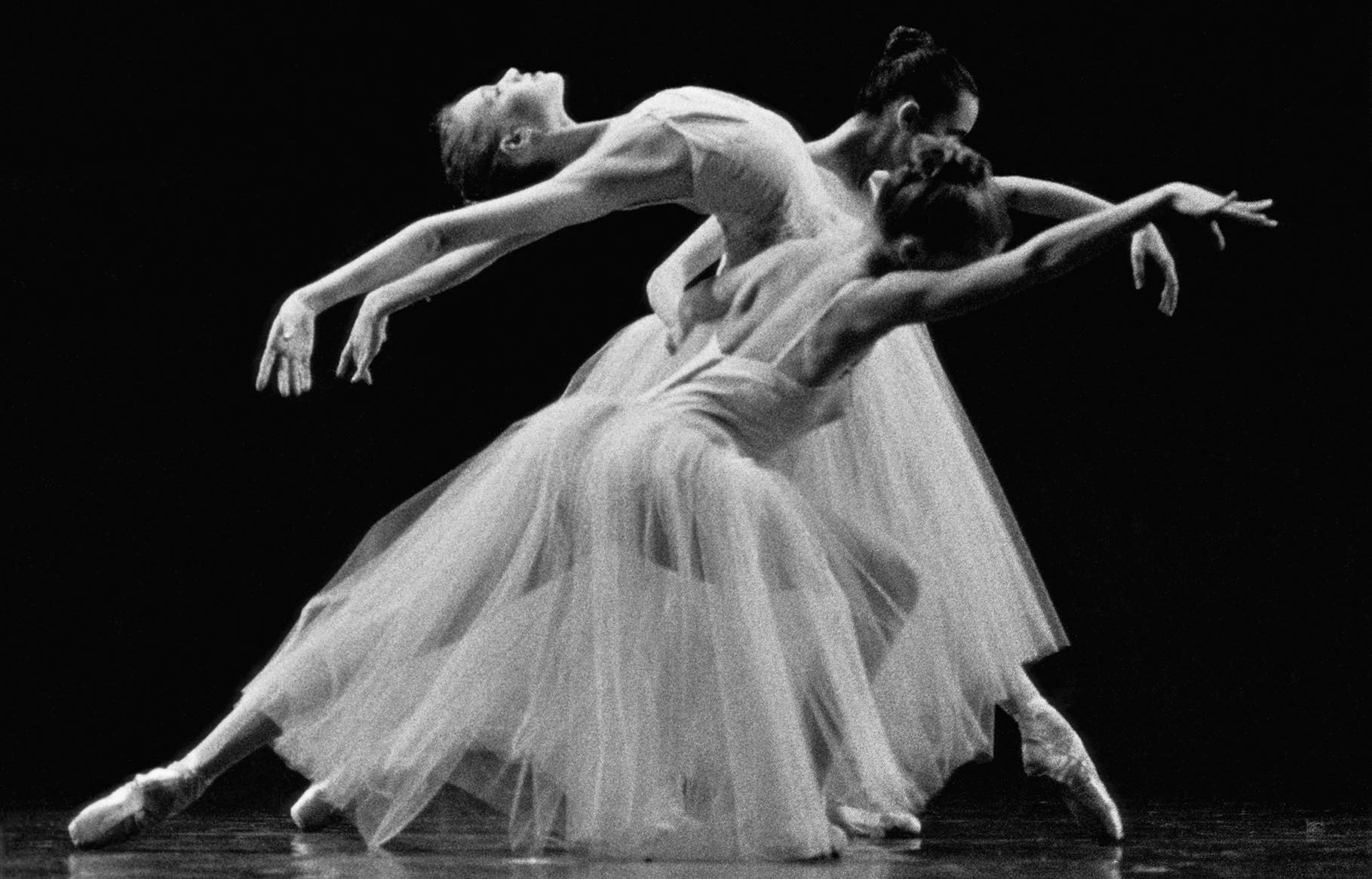
Serenade is, if not his greatest ballet1, Balanchine’s most performed ballet, and the most rewatchable. I’ve seen it twice, once at New Jersey Ballet and once in a heart wrenching, oh-this-is-how-dance-should-feel performance at New York City Ballet with Sara Mearns. I’ve written about it previously (twice!) but yesterday I watched the ballet yet again, albeit on film. At my summer intensive, the RAs organized a movie night. Much to my relief (I’m the type to fret over casting) it was the recording with Kyra Nichols, Darci Kistler, and Maria Calegari as the principal women. This is my go-to video when I need something for pointe shoe sewing, cheering myself up, or simply reminding myself why I love ballet. I was surprised to see how many new things I noticed on this umpteenth viewing. And that is what makes Serenade so rewatchable. Each viewing peels back another layer of Karinska-tacked tulle, revealing new colors and rhinestones hidden beneath the surface. Here are 3 noticings from yesterday.
Noticing #1
In this short section, where the corps de ballet forms a wedge upstage left. The 16 ballerinas are in 5 lines of 6, 4, 3, 2, and 1 dancers each.
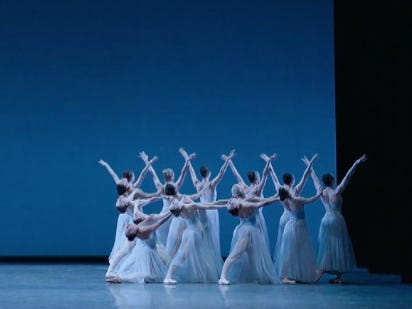
The corps hold this pose (and their backbends!) while a soloist jumps and swoons, and then the back-most line of 6 breaks off two at a time, one from each side, forming a diagonal aisle.
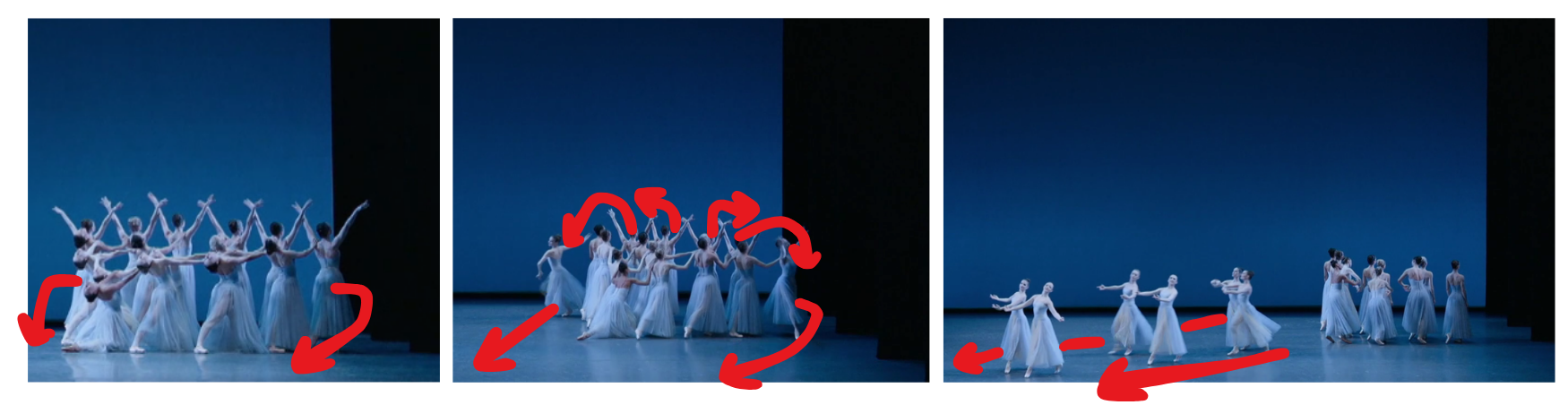
Next, the girls in the front two lines and one girl from the third one create the next two segments of these aisles. Around the same time, the center girl from the third line also turns around. She does a lovely port de brah and saut de chats right of stage. There are 15 dancers left onstage.
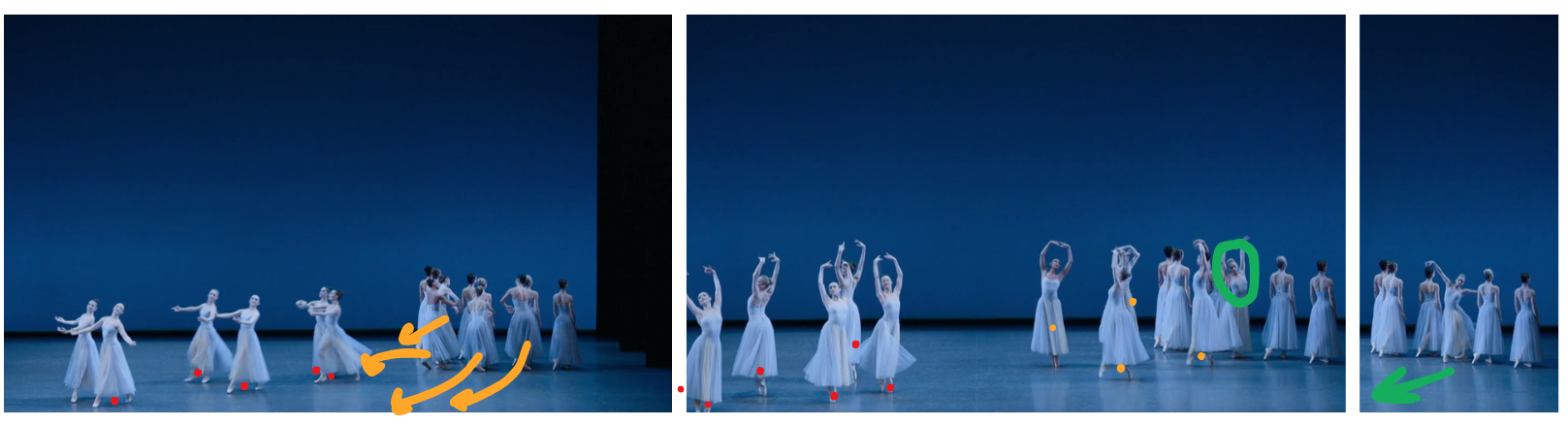
By now, the aisle is a group of 10 dancers,and there are 5 remaining dancers upstage. But 15 can also be subdivided into 6 and 9- so when the group of 5 and the group of 10 swap sides, the dancers most stage right stays there, so that the new configuration can materialize.
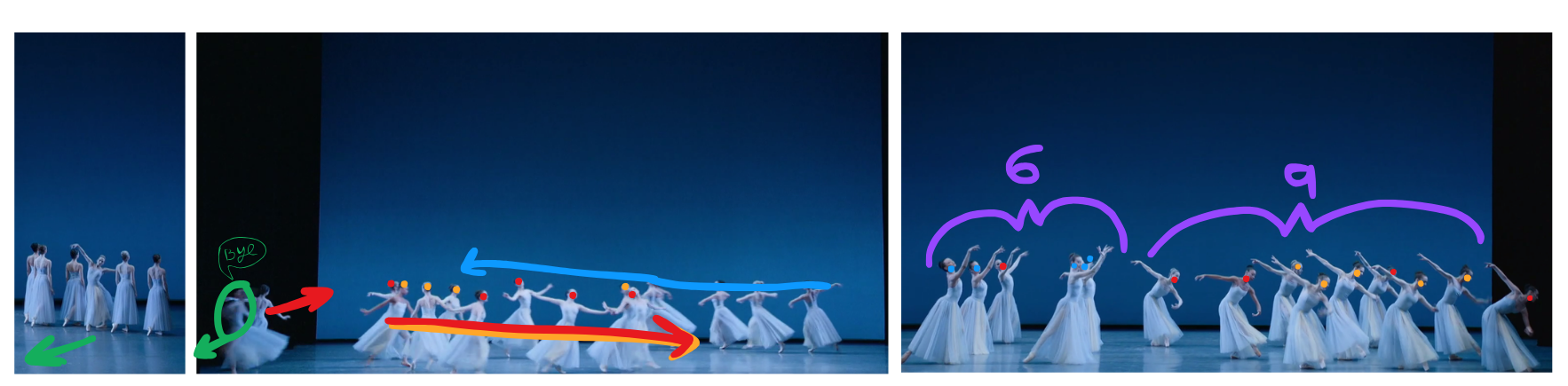
The reason I walk you through all of this is to try explain how this ballet feels really magical. On paper, it’s just simple arithmetic, but in performance, the groupings seem to materialize out of pure air or ether. We have the numbers, but there is still something a little bit more than 32 or 30 pointe shoes onstage.
Noticing #2
Whenever I hear the score for this ballet, I remind myself to listen for this specific moment because I never could remember what exactly is happening with this section of music. So here it is.
This clip is part of the second movement, the waltz, a part when the strings slow down so much they sound almost hesitant. The simplicity of the movement- the rows slowly forming a gradient of levels, and then four girls breaking away and just walking and pausing and walking and pausing- matches the music perfectly. The moment is quiet and pure.
If you’ve ever heard the pas de deux music from Tschaikovsky’s Nutcracker, you know that simplicity can be the most beautiful thing. Tschaikovsky walked the notes down the musical scale. Balanchine had his dancers walk2 downstage.
Noticing #3
Another moment- I’m not sure if it’s just a quirk of the recording or a facet of Kyra Nichols diamond-cut interpretation of the Russian Girl- that gives me chills is right before she leaps into the arms of her partner in the Elegy.
After two corps ballerinas are lifted and swiftly run off, Nichols prepares for her own lift. She runs on from the same place as her predecessors, but pauses and lifts her arms for the slightest millisecond (0:11 below). I don’t know what her character is thinking- it could be hesitation or hope or acknowledgement of a great love or shyness- but it gives me chills even as I rewatch the clip.
Where to see dance this week:
While American Ballet Theatre finishes up its run in the Met Opera, just outside the building sits a Dance Floor erected each summer for Lincoln Center’s “Summer for the City” series. This week, you don’t get to just see dance- you get to do it! This Friday features “Tribute to Latin Music Giants with Jimmy Bosch”, an all-ages, free event including live music and a dance lesson in salsa.
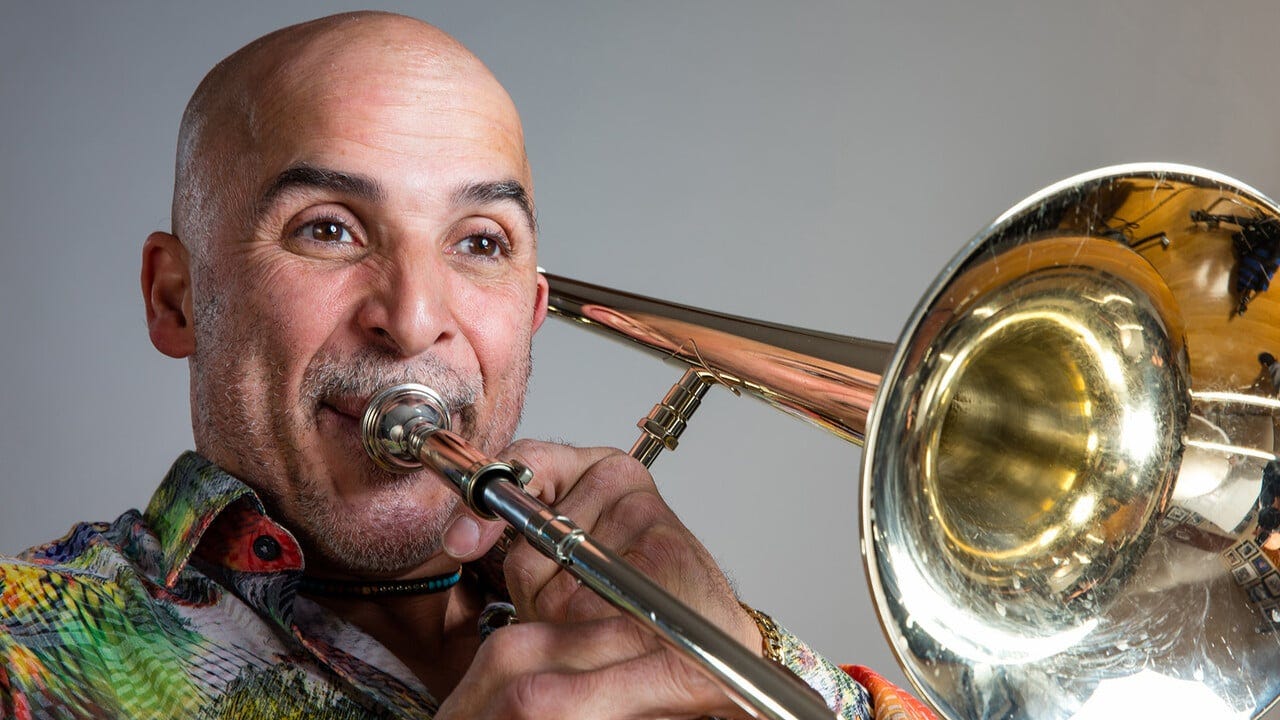
Learn more about the dance party, and all Summer for the City events, here.
This is based on one’s opinion and time of life- right now, Agon holds the title for me. I love the attack it demands and the use of classical vocabulary in conversation with wild innovation. And the music! So good.
And speaking of walk, what about walking’s cousin, running? This ballet is full of running. Running with abandon, running across stage and into jumps, running for fear or joy or love or all three or for no reason at all.
A day that starts with reading Mary Nora writing about Serenade = a good day !!
The Great Performances PBS youtube channel just added NYCB's Madrid performance to its channel. Which leads off with Serenade.